

Deciding between new and used items often presents a challenge. Due to their various uses, the decision becomes even more significant when dealing with shipping containers. So, which option is best for your needs? This article will break down the benefits and drawbacks of both choices.
The Advantages Of New Shipping Containers
Recognizing the merits of choosing new shipping containers is crucial in making an informed decision.
Here are some of the key benefits of opting for a brand-new container:
- Quality assurance: You get impeccable quality when choosing a new container. It’s untouched, free from wear and tear, and typically has a manufacturer’s warranty. This pristine condition means starting with a blank slate that meets all industry standards without any associated risks of used items.
- Longevity: A standout advantage of new containers is their prolonged lifespan. They promise more years of reliable service, positioning them as a solid long-term investment. This durability means fewer concerns about premature replacements or repairs, potentially offering savings over time.
- Customization: One of the perks of new purchases is the possibility of customization. Whether you need tailored modifications, special features, or unique dimensions, manufacturers are generally more willing to accommodate these needs with new orders.
Opting for a brand-new shipping container underscores a dedication to quality and adaptability. It provides a product that meets precise specifications, remains untouched from prior damages, and is prepared to fulfill its role effectively for the foreseeable future.

The Disadvantages Of New Shipping Containers
While new shipping containers offer numerous benefits, it’s essential to consider the potential disadvantages.
Below are some of the challenges you might face when choosing a brand-new container:
- Higher initial cost: The increased upfront expense is one of the drawbacks. New containers typically come with a heftier price tag, which might only be feasible for some budgets.
- Longer lead times: Depending on the manufacturer, demand, and any customizations required, there might be longer wait times. This can pose challenges for projects on tight schedules or when immediate container usage is crucial.
- Environmental concerns: Creating new containers demands energy and resources. This process might have a larger carbon footprint than reusing an existing container, making the newly produced options less eco-friendly.
- Exceeding needs: Sometimes, the pristine condition of a new container might be more than a project requires. Opting for one might be unnecessary if the task doesn’t require a brand-new container.
Being aware of these potential challenges is paramount. While new shipping containers promise quality and durability, assessing if their drawbacks align with your project’s needs and constraints is essential.
The Advantages Of Used Shipping Containers
When considering the purchase of shipping containers, it’s worth noting the advantages of selecting used options.
Here are some of the primary benefits of going the pre-owned route:
- Cost-effective: One of the most compelling reasons to choose used containers is the potential for significant cost savings. Purchasing pre-owned often means spending a fraction of the price of new containers.
- Eco-friendly choice: You recycle an existing resource by opting for a used container. This decision helps reduce carbon footprint by reducing the energy and raw materials needed for manufacturing new containers.
- Immediate availability: Used containers are typically available for immediate purchase and delivery. This quick accessibility is excellent for projects that require a swift turnaround.
- Character and aesthetics: For some projects, the weathered look of a used container adds character and a distinct aesthetic appeal. This natural patina can be ideal for endeavors that benefit from a rugged or vintage appearance.
Selecting a used shipping container can offer both practical and aesthetic advantages. While they might show signs of wear, their proven performance, cost-effectiveness, and unique character can make them a compelling choice for various projects.

The Disadvantages Of Used Shipping Containers
Choosing used shipping containers might seem appealing for various reasons, but awareness of potential challenges is vital.
Below are some of the common pitfalls associated with opting for pre-owned containers:
- Wear and tear: By their nature, used containers have seen previous service, which means they might have dents, rust, or other signs of wear. This can lead to concerns about structural integrity and aesthetics.
- Limited lifespan: Since these containers have been used before, their remaining service life might be shorter than that of a new container. This could result in the need for earlier replacements or repairs.
- Unknown history: It’s often challenging to determine what a used container transported in its past. This can pose risks, mainly if it previously carried hazardous materials or contaminants.
- Less customization: While modifications are still possible, used containers offer a different flexibility for customization than their new counterparts. Existing wear or structural changes can limit the alterations you can make.
Although used shipping containers have clear benefits, these potential downsides highlight the need for a comprehensive inspection and a clear understanding of your project’s requirements before making a choice.
How To Make An Informed Decision
Selecting between new and used shipping containers can be challenging. Nevertheless, you can choose an option that aligns with your needs by evaluating the advantages and disadvantages and considering essential factors.
Here are some steps to guide your decision-making process:
- Assess your budget: The financial aspect is crucial. Determine how much you’re willing to spend and see which option aligns best with your budget. Remember, while new containers might be pricier upfront, they offer savings in the long run due to reduced maintenance and longer lifespan.
- Understand your purpose: Are you using the container for storage, living space, or a temporary setup? Some applications benefit from the pristine condition of a new container, while others can do just fine with a used one.
- Inspect before buying: Conducting a thorough inspection is essential if you lean towards a used container. Check for signs of significant wear, structural issues, and potential contaminants.
- Factor in longevity and maintenance: When considering the intended duration of your project, think about the care involved. New containers require less immediate attention but benefit from regular shipping container care and maintenance. On the other hand, a used container might require prompt maintenance efforts to ensure it lasts.
- Research suppliers: Purchasing from a reputable supplier is vital whether you opt for new or used. Look for reviews, ask for references, and ensure they offer quality products.
Gaining the necessary information and evaluating your needs will lead to a well-informed decision. With careful consideration, you can select a shipping container that aligns perfectly with your project’s goals.
Conclusion
In choosing the right shipping container for your project, the blend of practicality, purpose, and budget guide the best decision. Whether you lean towards the untouched quality of a new container or the cost-effectiveness of a used one, ensure it aligns with your project’s core requirements. Equip yourself with the right insights, choose wisely, and set your project up for success.
Wear and Tear
Shipping containers often take a beating, traveling around the world, being exposed to freezing conditions, and rust due to seawater or when the frost has melted.
During the cold season, and in freezing parts of the world, our shipping container tool can benefit the opening of frozen shipping container doors in freezing conditions and hard to open or rusted containers once the winter has ended.
Injuries often occur as a result of personnel trying to open and close difficult container doors, often the result of inappropriate techniques being used to open them.
Shipping container doors are not typical doors and there are 4-5 hinges per door. The hinge pins must be lined up correctly for the doors to be free to fully open and close.
Here are some likely reasons a frozen shipping container door will not open or close. Our tool helps to address these issues.
- The container frame is racked so that the door gear will not operate correctly. This may be caused by cargo shifting during transit. Look at the container to make sure that the doors are aligned and level, both top and bottom.
- The hinge pins and blade are seized due to corrosion.
- The door gasket has been damaged and is preventing opening. Door gaskets are designed to present two or more fins against the structure or adjacent door. These are generally flexible but when the gasket is damaged, they may become hard or blocked thus jamming the door closed, or preventing it being closed.
- Water has become trapped between the doors and frozen, particularly relevant to refrigerated cargoes, or containers with moisture releasing cargoes in cold weather.
Please be sure to read OPNBar Extended Instructions & Precautions
This leverage tool uses the principles of leverage to do the difficult work. By providing an extended area on which to grasp, with both hands, a more stable platform to manipulate the latch handle is achieved.
Designed to fit and extend the door latch handles on side by side doors found on the following units with the safety of the truck driver, operator, and worker foremost in mind:
- Dismountable Shipping Cargo Containers
- Refrigerated Shipping Cargo Containers
- Semitrailer Dry Freight Cargo Vans
- Semitrailer Refrigerated Freight Cargo Vans
This intermodal container (also known as ISO Container or Conex Box) cargo inspection tool and leverage safety bar is to aid in opening and closing side-by-side doors found within Dismountable Shipping Cargo Container Transportation Industries (Railroad, Harbor, and Trucking Industries).
Eliminates the Need for a crescent wrench, screwdriver, hammer, and crowbar which are commonly needed/used to open stuck frozen shipping container doors.
Related: Injuries from Opening/Closing Hard to Open/Close Shipping Container Doors
Shipping Container Door Diagram and Troubleshooting
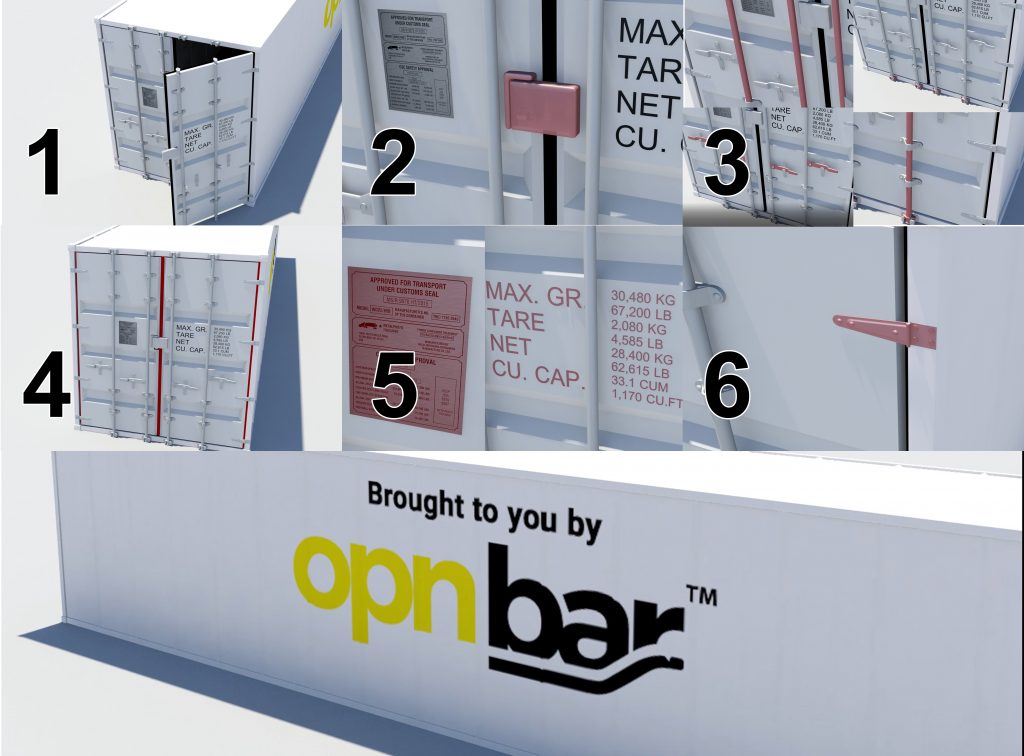
Shipping Container Diagram
1. Doors
Two door leaves are fabricated from two vertical rolled hollow sections and 2 horizontal c section members. The frame is infilled with corrugated steel paneling.
These are normally attached to the rear corner posts each with four drop forged steel hinge blades. The blades allow 270 degree opening which allow the doors to swing back against the container side wall.
(Cargo may shift during transit. Look at the container to make sure that the doors are aligned and level, both top and bottom. In cases where the container frame is racked and the door gear will not operate correctly.)

Shipping Container Door
- Shipping Container Doors | Buy on Amazon or eBay
2. Lockbox
The lock box is a steel box welded to the right hand door which overlaps a staple welded to the left hand door. A padlock, normally type CISA type 285 66 can then be attached inside the lock box through the staple and is then protected from direct attack, hindering attempts to gain entry to the container.

Shipping Container Lockbox
- Shipping Container Lockbox | Buy on Amazon or eBay
3. Lockrods, cam keepers, handles
Each door is fitted with 2-4 vertical lock rods to enable opening, closing and locking of the doors.

Shipping Container Lockrods
- Shipping Container Lock Rods | Buy on Amazon or eBay
At the end of each lock rod (top and bottom) is a cam welded in place which engages with knuckles, also known as cam keepers.

Shipping Container Cam Keepers
- Shipping Container Cam Keepers | Buy on Amazon or eBay
The action of engaging the cams to the keepers forms an anti-racking function.
(In certain cases, often unfortunately too many, contents of the shipping container may have shifted, or containers even dropped, causing shipping container doors and lockrods to warp)
The door handle rotates the lockbar to initiates the door opening process by forcing the cams out of their keepers. Each door handle has a door locking handle retainer that slides over the door handle when in locked position.

Shipping Container Door Handles
- Shipping Container Door Handles | Buy on Amazon or eBay
4. Rubber gaskets
Rubber gaskets are fitted to the container doors during the manufacturing process and prevent water ingress.
(Door gaskets are designed to present two or more fins against the structure or adjacent door. These are generally flexible but when the gasket is damaged, they may become hard or blocked thus jamming the door closed, or preventing it being closed.)

Shipping Container Rubber Gaskets
- Shipping Container Rubber Gaskets | Buy on Amazon or eBay
5. ISO markings and CSC plate
ISO markings and a consolidated data plate allow worldwide intermodal transport when left in place and updated as necessary.

Shipping Container ISO Markings & CSC Plate
6. Hinge pins
Of course for a door to work, you need hinges.

Shipping Container Hinge Pins
- Shipping Container Hinge Pins | Buy on Amazon or eBay
(In certain cases when doors are difficult to open, hinge pins and blade are seized due to corrosion.)